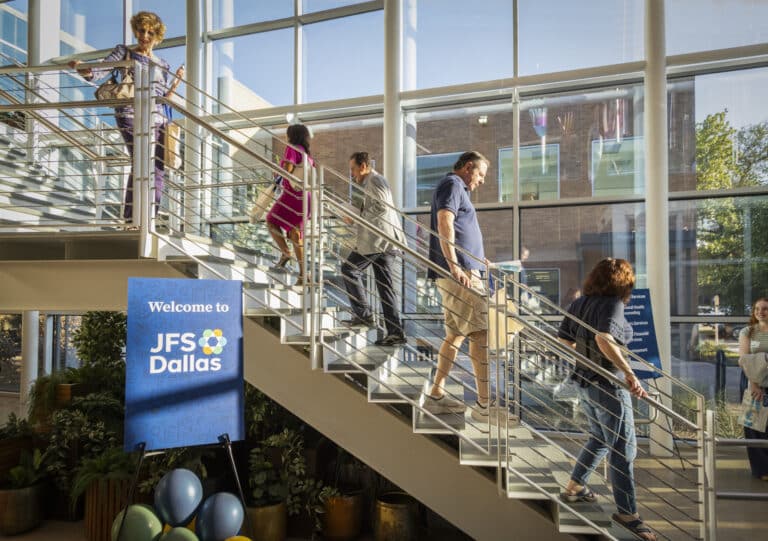
Six months ago, JFS Dallas began welcoming clients into the Karla & Larry Steinberg Building. For the Children’s Services team, the move brought something especially meaningful: spaces designed specifically for the way children and teens experience therapy.
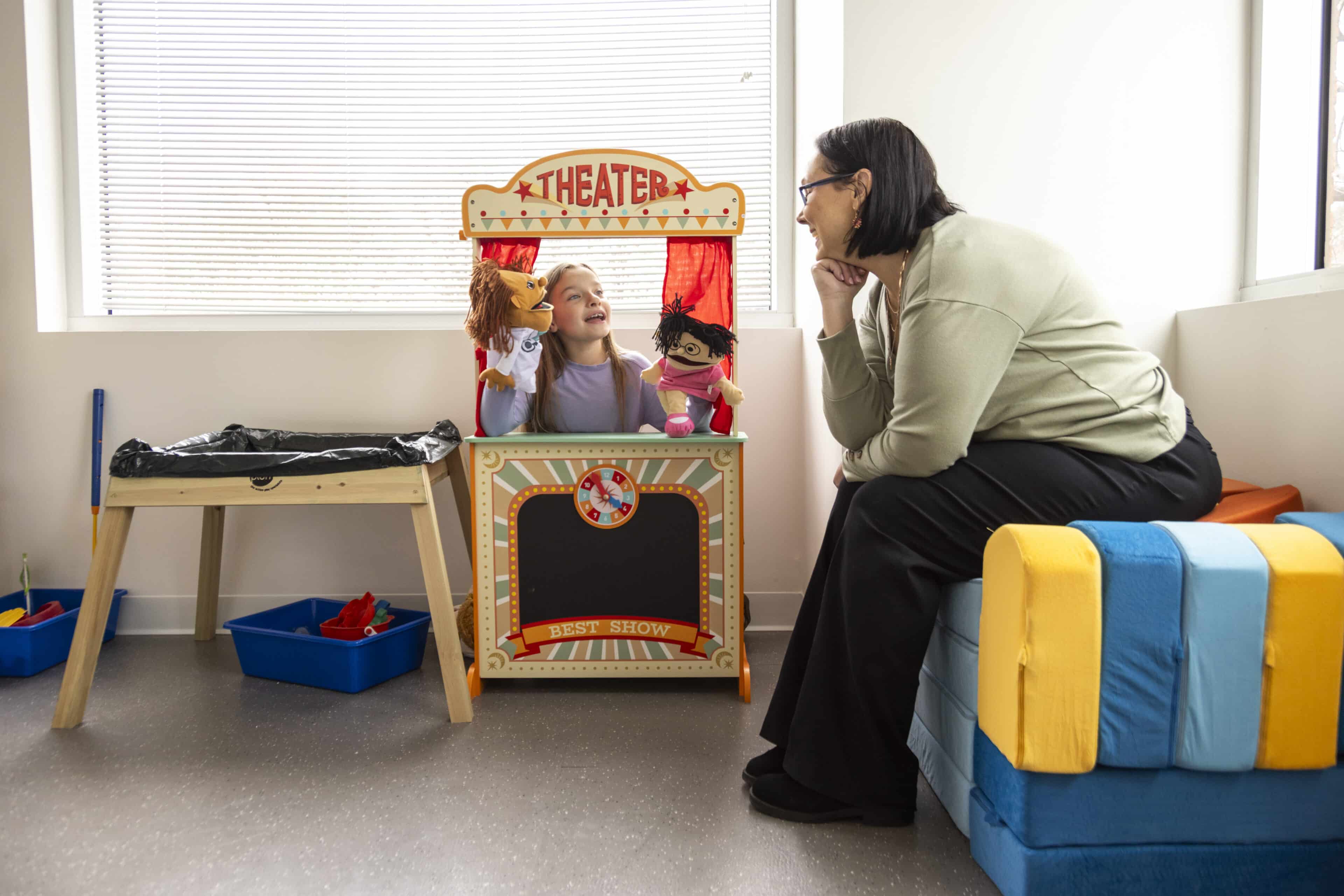
New play therapy rooms, a dedicated sand tray room, a state-of-the-art sensory gym, and adolescent therapy rooms give clinicians more tools to meet young clients where they are developmentally. Six months in, those spaces are becoming an important part of the progress happening in therapy every day.
Beth Coles, LPC-S, RPT-S, Director of Children’s Services, frequently uses the sensory gym and play therapy rooms together, beginning sessions in the gym before transitioning into play therapy.
“Not only are the spaces welcoming and beautiful, they also provide the tools we need to make progress with clients,” Beth said. “It has been interesting for us to see how using the sensory gym before play therapy has made a difference.”
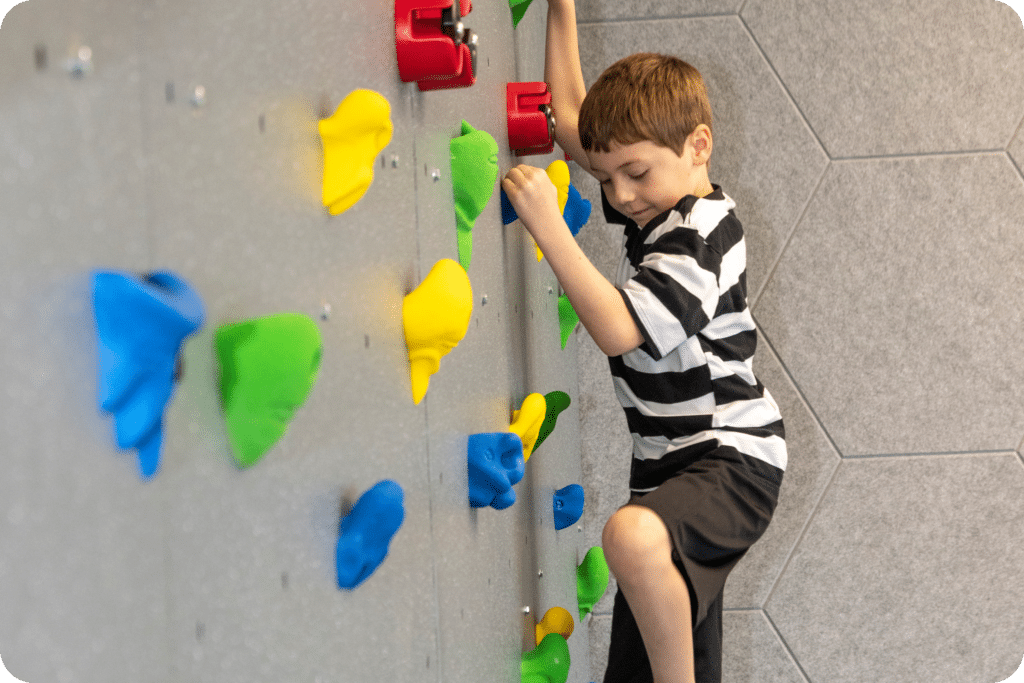
The sensory gym gives children opportunities for movement and sensory experiences that can help support emotional regulation before they begin the next part of their session. This can be particularly helpful for children with sensory sensitivities, including those with ADHD, autism, or anxiety.
For one young client, the sensory gym became a place to take an important step forward.
Beth recalls working with a child who experienced significant anxiety and a fear of trying new things. During a visit to the sensory gym, the child began trying activities that felt “risky” to them.
“Seeing them try new things was huge progress,” Beth said.
The spaces also recognize that what feels welcoming and engaging to a young child may be very different from what a teenager needs. Beth has noticed, for example, that adolescent clients are particularly drawn to the basketball hoops found in several of the new spaces. These details can give young people opportunities to feel more comfortable and engage with their clinician in ways that feel natural to them.
The rooms may look colorful, inviting and fun, and each was intentionally created with a larger purpose in mind.
“Providing an accessible, developmentally appropriate area for them to do clinical work is essential,” Beth said.
Six months after opening the doors to the Steinberg Building, these spaces are doing exactly what they were designed to do: giving children and teens room to express themselves, try something new, and take meaningful steps forward.
Learn more about our Children’s Behavioral Health services and how we support children, teens, and families at jfsdallas.org/childrens-behavioral-health.