For someone who has been told they have prediabetes, figuring out what to eat can quickly become overwhelming. Should carbohydrates be avoided? Does everything need to be organic? Are favorite foods suddenly off the table?
At Jewish Family Service of Dallas, nutrition education is helping individuals replace some of that uncertainty with practical information and achievable goals.
Through JFS Northpoint Health Center, Registered and Licensed Dietitian Wendy Wittenbrook provides both individual nutrition support and interactive nutrition classes designed to help participants make informed, realistic choices about their health. In the 10 months since nutrition services began, JFS Dallas has provided 169 individual Registered Dietitian visits.
Learning by Doing
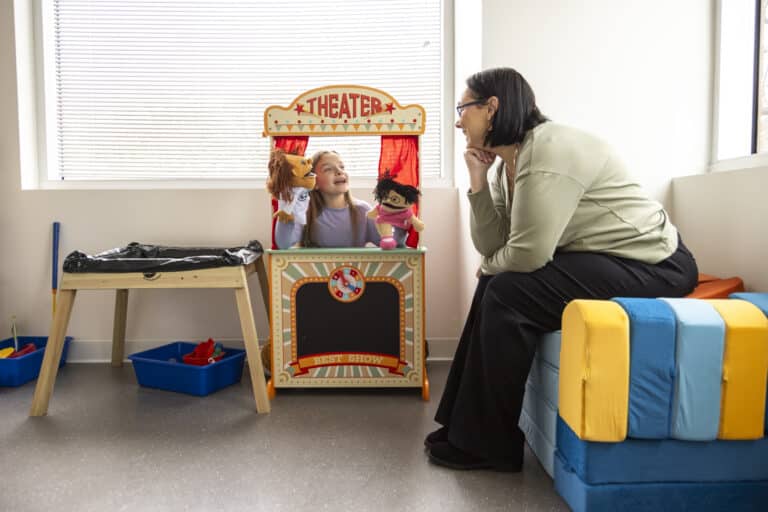
The Prediabetes class is an interactive class that combines education, hands-on activities, and group discussion. Participants learn about different food groups and how they affect blood sugar, how to build balanced meals and how movement can help reduce their risk of developing diabetes.
But the class isn’t simply about telling participants what they should or shouldn’t eat.
Using food picture cards and divided plates, participants practice building sample meals and learn how carbohydrate foods affect blood sugar. Wendy also incorporates examples of familiar, real-world meals, even Whataburger, to help participants see how the foods and beverages they already encounter fit into The Diabetes Plate.
Those activities can lead to some surprising realizations.
“Clients will say, ‘I didn’t know that’ or ‘oh, that makes sense!’ as we go through our discussion,” Wendy said.
For example, many participants are surprised to learn that corn counts as a carbohydrate on The Diabetes Plate because of how it affects blood sugar. Looking at complete meals can also help participants recognize how quickly carbohydrates can add up, particularly when sugar-sweetened beverages are included.
The goal isn’t perfection. It’s understanding.
“I love seeing the ‘lightbulb’ moments when something clicks with a client,” Wendy said. “Nutrition education can feel overwhelming. I enjoy helping people learn that healthy eating does not have to be complicated or perfect.”
Turning Information Into Everyday Habits
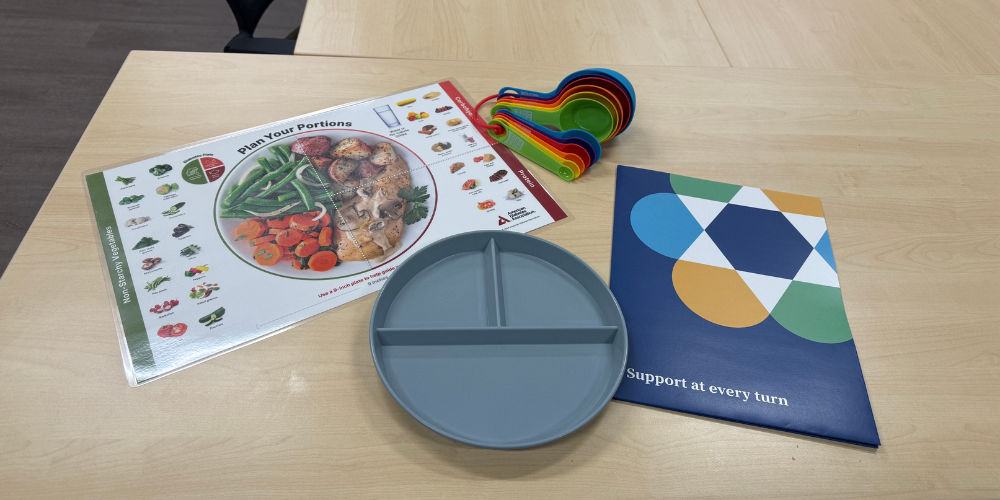
Participants leave the class with more than information. They receive handouts, a divided plate, The Diabetes Plate placemat, and measuring cups so they can continue practicing what they learned at home.
They also leave with one or two goals they can begin working toward right away.
The class addresses meal timing and portion sizes while helping participants understand that their favorite foods can still have a place in their diet. Wendy also addresses common nutrition misconceptions, including the belief that organic foods are always healthier or that someone with diabetes or prediabetes must eliminate carbohydrates completely.
That practical approach is particularly important in a world where nutrition information is everywhere, but reliable nutrition information can be harder to identify.
“I want them to have practical, evidence-based information they can actually use, not just a long list of foods to eat or not eat,” Wendy said.
The conversations that happen between participants are another important part of the class. One person may ask a question others were wondering about, while someone else may share an idea that has worked for their family. Together, participants can learn not only from Wendy, but from one another.
Nutrition as Part of the Bigger Picture
Knowing what to eat is only one part of making healthy choices possible.
Financial limitations, access to food, available cooking facilities, and knowing what or how to cook can all create barriers to healthy eating. That is where having nutrition services within JFS Dallas can make an important difference.
Wendy works alongside the primary care providers at JFS Northpoint Health Center as part of a multidisciplinary team. When another challenge comes up during a nutrition visit, the support doesn’t have to stop there. For example, if someone is experiencing food insecurity, Wendy can connect them with the JFS Food Pantry.
It is an approach that recognizes that improving health may require more than a recommendation. It may also require helping someone address the barriers standing in the way.
For Wendy, success can be as simple as seeing someone leave class feeling a little more confident than when they arrived.
“You do not need to know anything about nutrition before coming to class, and you do not have to eat perfectly,” she said. “My goal is for clients to understand how the food they eat and the movement they do can reduce their risk of developing diabetes.”
And rather than leaving with an overwhelming list of changes to make, participants leave with one or two practical goals they can start working toward, making healthier choices feel a little more doable, one step at a time.
For someone navigating prediabetes, those small, achievable changes can be an important step toward better health. And at JFS Dallas, they don’t have to take that step alone.
Interested in nutrition support at JFS Dallas? Get started with a medical appointment at one of our JFS Health Centers. Learn more about JFS Health Care and make an appointment.