By Eli Cohn-Wein, Food Pantry Manager
Why We Opened Our Pantry Twice a Month
When we opened the new food pantry at the Jewish Family Service of Dallas Karla and Larry Steinberg Building this spring, the additional space allowed us to welcome households twice a month instead of once. That change reflected a shift in philosophy. Food pantries in this country were invented back in the 1960s as emergency relief: a short-term bridge for a family having one bad month. But “one bad month” stopped being the reality a long time ago.
The reality, now that minimum wage has stopped keeping pace with the cost of groceries, is that even families with two adults working full-time jobs can still fall below the poverty line. The Federal Reserve has found, year after year, that nearly 4 in 10 adults couldn’t handle a surprise $400 expense like a car repair or a modest medical bill without borrowing money or selling something, and more than 1 in 8 couldn’t cover it at all. For a lot of households, one bad week is the whole margin.
SNAP Is the Foundation of Food Assistance
So modern pantries have redesigned around a different idea: being part of a pyramid of support. SNAP (you might know it as food stamps) is the foundation. It’s the steady federal floor under a family’s grocery budget, and it’s the most efficient tool we have for getting food to people who need it, delivering nine times as much food as food pantries do to Americans every year. It’s such a vital part of the ecosystem that we keep a SNAP specialist (provided by the incredible team at North Texas Food Bank) on-site every single day we’re open, so we can help as many families as possible close that loop.
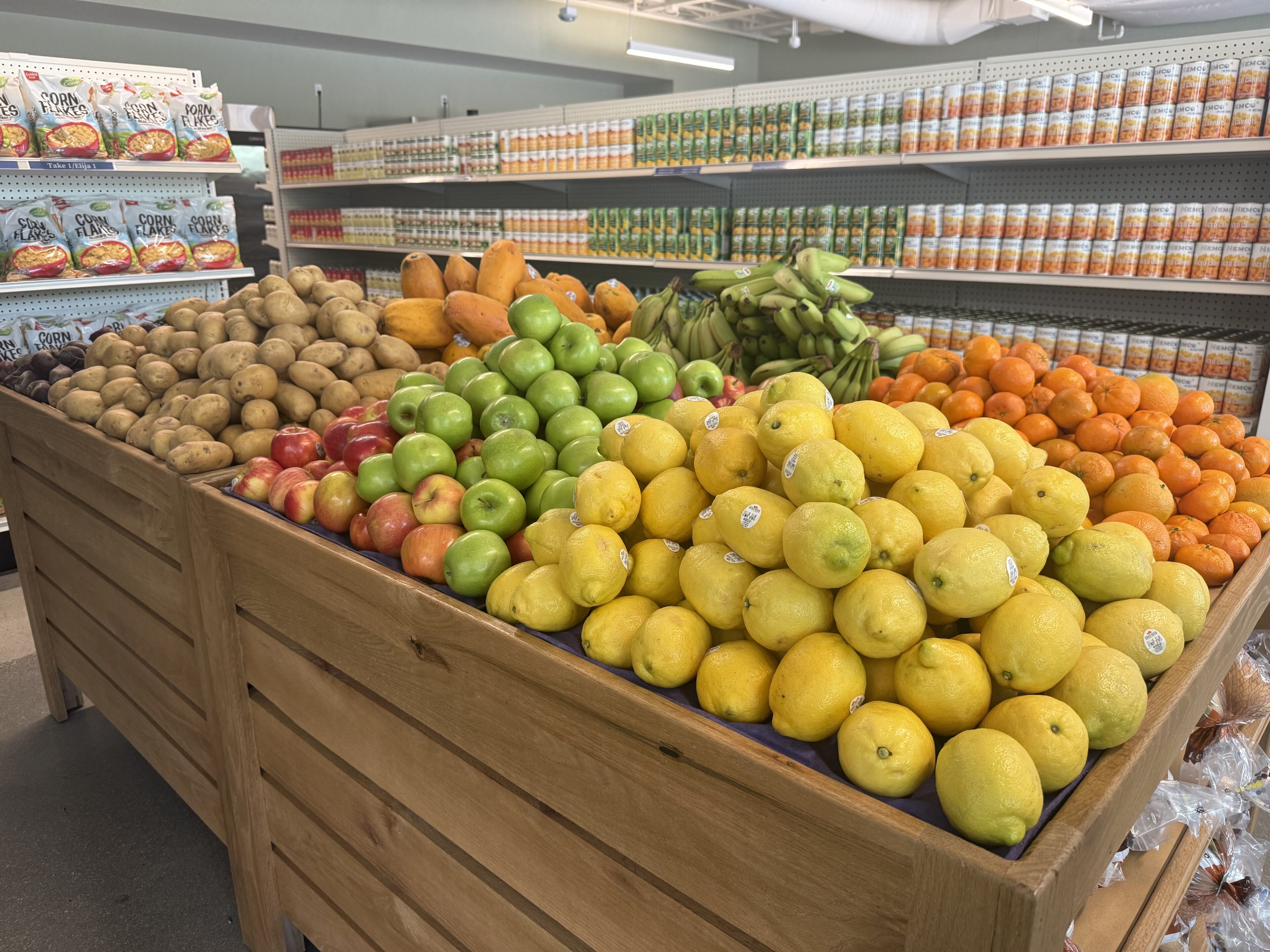
Our role isn’t to replace that floor; it’s to sit on top of SNAP’s foundation and help those dollars stretch further. We stock shelf-stable staples in real quantity: things like rice, beans, pasta, and canned goods. We also provide produce, dairy, bread, meat, and other perishable items, but obviously cannot provide enough to cover the full two weeks between visits. So when a household comes through, we do our best to fill their shelves with the basics (and a few extras too), which frees up their SNAP benefits for the things only they can choose for their own families.
What’s Changing Under the New Law
The pyramid of support we’ve built only works if its foundation holds. And the new federal law known as the One Big Beautiful Bill Act reshapes that foundation. Among other things, it includes roughly $186 billion in cuts to SNAP over the next decade. Starting later this year, Texas will have to cover 75% of the program’s administrative costs, up from the 50% the state has long paid. And beginning October 1, 2027, states will for the first time pay a share of the actual food benefits, with the size of that share tied to something called the “error rate.”
Here’s what that term actually means: the error rate is the share of cases where a household’s benefit was calculated a little too high or a little too low. The U.S. Department of Agriculture is clear that it is not a measure of fraud — it captures ordinary administrative mistakes, and it counts a family that was accidentally shorted right alongside one that received a few dollars too many.
According to the latest figures, about 9.34% of Texas SNAP payments fell into that “error” bucket. To avoid the new benefit penalty, the state would need to bring that under 6%; at its current rate, Texas’s share would land at roughly 10% of benefit costs. And the timeline is tight — the provision takes effect in October 2027, but the rate that determines it is set as early as this coming September.
Why It Matters
If Texas suddenly owes a share of benefit costs it has never had to carry, the likeliest responses are to trim benefits or tighten who qualifies. That falls hardest on the households with the greatest need — and it pushes more families toward food pantries and increases the challenge of addressing hunger in our community. When the floor gives, pantries are what’s left to catch people, and we can only stretch so far.
We built the twice-a-month model to be a partner to SNAP, not a replacement for it, and we’ll keep showing up for our neighbors either way — that’s the job. But it’s worth understanding what’s really at stake here, and for whom.