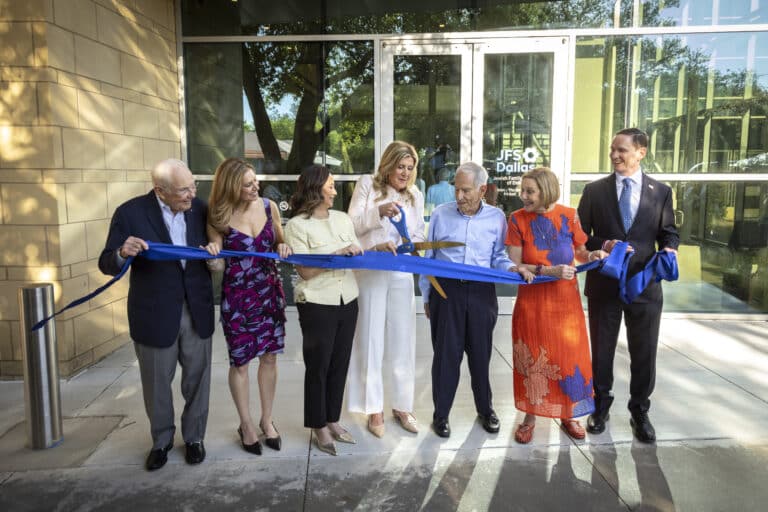
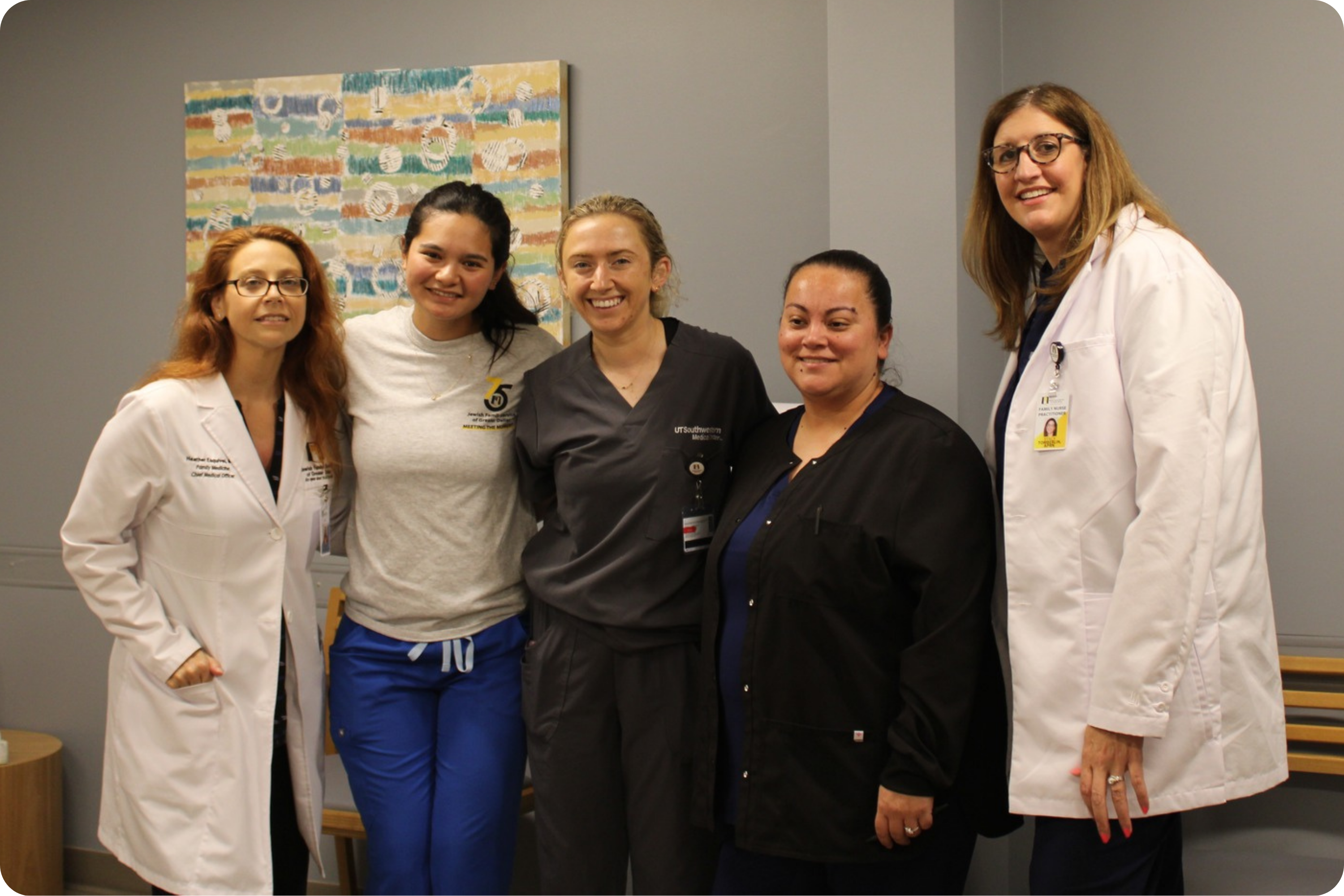
Two years ago, Jewish Family Service of Dallas opened the doors to the JFS Northpoint Health Center with a clear purpose: to bring high-quality, compassionate primary and behavioral health care closer to people who have long struggled to access it.
Since then, the JFS Northpoint Health Center has grown steadily, serving over 800 individuals while building the systems, partnerships, and trust required to support long-term community health. Now, the health center has reached an important milestone.
In November of 2025, JFS Dallas submitted its application for Federally Qualified Health Center (FQHC) Look-Alike status. Achieving this status indicates that JFS Dallas meets the high standards of the FQHC program, and allows for future growth and long-term sustainability.
This application reflects 18 months of hard work: staffing, and opening a clinic, developing policies and procedures, and meeting rigorous quality standards. JFS expects to receive FQHC Look-Alike designation by fall 2026.
What FQHC Status Means and Why It Matters
Federally Qualified Health Centers, also known as community health centers, are not government-run clinics. An FQHC is a community-based organization that receives federal support to serve populations with limited access to primary and preventive care.
Across the country, there is a critical shortage of family doctors and preventive care options, especially in communities with high uninsured rates. About 17–19% of Texans lack some form of health insurance, and often delay care until a health concern becomes an emergency.
FQHCs are designed to change that by building relationships between providers and patients in the communities they serve. These relationships focus on addressing needs and empowering patients to improve their health.
Many patients of the JFS Northpoint Health Center had not seen a primary care provider in years, and relied on emergency rooms simply because they didn’t know where else to go. “A lack of knowledge frequently creates fear,” explains Community Health Worker Becky Nurko. “I hear people say, ‘I’ve never been sick, so I don’t need a doctor.’ I help them understand that primary care isn’t just for emergencies, it’s about prevention, stability, and long-term health.”
FQHC designation also provides a sustainable funding model for JFS Dallas. Insurance providers like Medicaid and Medicare pay an enhanced rate to FQHCs in recognition of the high-quality care that they provide. This care reduces hospital admissions and overall costs for insurance providers. When health care services are self-sustaining, donor dollars can be used to expand other services at JFS Dallas, support new programs, and invest in the community.
But while FQHC designation strengthens the foundation of the health center, JFS’s innovative approach to health care also includes investment in new positions like Community Health Workers, known as CHWs.
Community Health Workers are a bridge between patients and the healthcare system.
That bridge is essential for the communities JFS Dallas serves, many of whom have been disconnected from, marginalized by, or even harmed by the healthcare system in the past. These are individuals who may have skipped medical appointments for years, not because they don’t care about their health, but because medical care has felt intimidating, inaccessible, or unsafe.
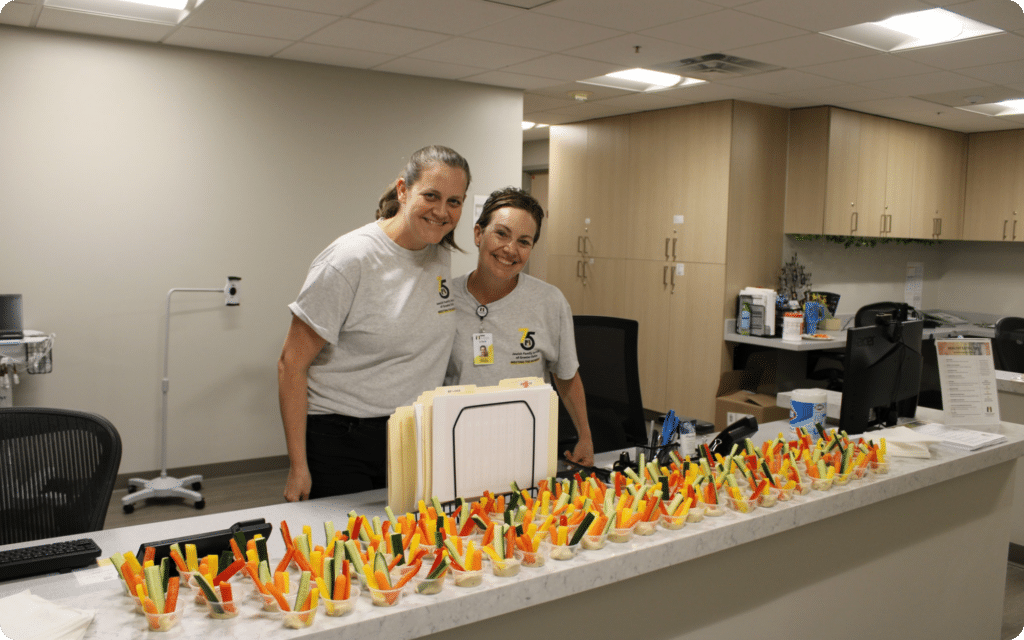
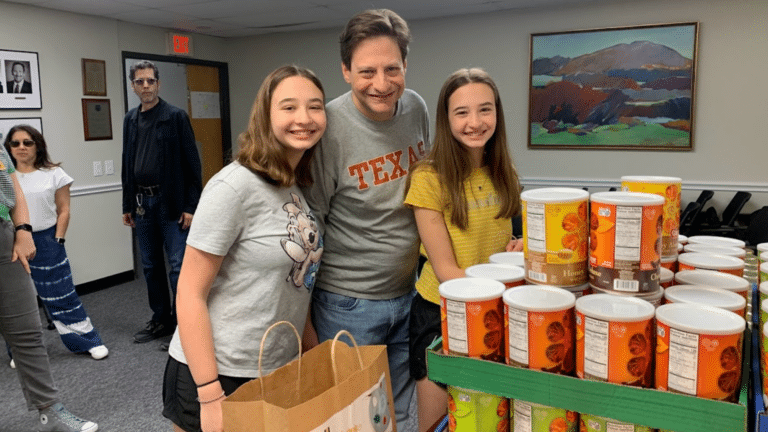
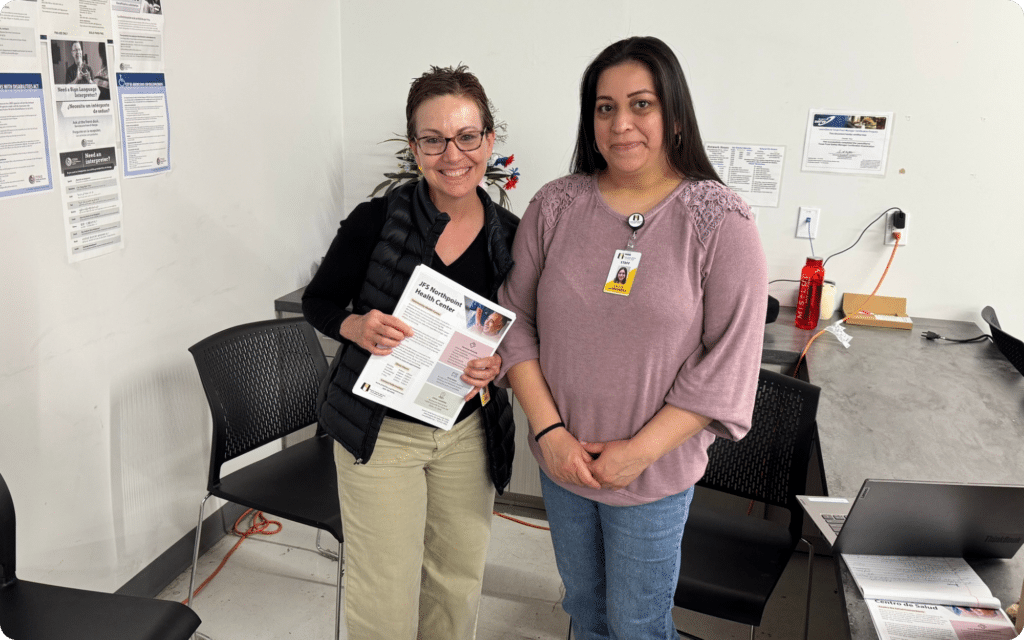
Community Health Workers (CHWs) meet people long before they ever walk into a clinic. They are out in the community—at food pantries, schools, health fairs, apartment complexes, and neighborhood gathering spaces, having real conversations in familiar settings. Over the past year alone, our team of trained CHWs has connected with more than 1,500 people outside of traditional health care environments.
As Community Health Worker Dana Branch explains, trust always comes first.
As a CHW, it’s important to build trust by validating people’s fear—whether it comes from family history or past diagnoses,” she says. “We use empathetic communication and help remove barriers like cost or transportation that might prevent someone from going to the doctor.
Those barriers are real. Patients often worry about missing work, finding childcare, affording copays, or hearing a diagnosis they feel unprepared to face. CHWs help patients name those fears and then walk through them.
“They’re afraid the doctor will find something they’re not prepared to deal with,” Dana says. “I encourage them that most things are preventable with early detection. You can’t address something if you don’t know it’s there.”
Walking Beside Patients—Every Step of the Way
Community Health Workers don’t rush people into appointments. They listen. They explain. They walk alongside patients.
Jenifer Hernandez, JFS Dallas Community Health Worker, describes her role as deeply relational.
“When I meet someone who is scared or nervous, first of all I value their time to listen and be empathetic,” she says. “Maybe in the past they haven’t had a pleasant experience. I emphasize how important access to care is for their long-term health, and I explain that we have a team ready to guide them so they can receive proper care.”
Sometimes that guidance means explaining what will happen the moment a patient walks into the clinic. Sometimes it means reassuring them that language will not be a barrier—that interpretation services are available and that they will be treated with dignity and respect.
For others, it means staying after an appointment, helping schedule follow-ups, assisting with Medicaid, Medicare, or SNAP applications, or connecting families to resources like food assistance or diapers so they can prioritize their health.
“My role as a Community Health Worker is to be a bridge between the community and the organization,” Jenifer says. “We look at the social determinants of health [such as economic stability, healthcare access, access to healthy food, and other stressors] and where we can provide better outcomes for the community.”
1,500
individuals have interacted with a JFS Dallas Community Health Worker in the past year
For many patients, the support of a CHW makes the difference between putting off care and following through.
“When a patient messages me afterward to say thank you for helping them make the appointment and for how good their experience was—that’s when I realize how important this role is,” Jenifer shares. “They were nervous, but they were able to be seen and follow up on their health. That is a blessing for me.”
Dana recalls similar moments: “Vulnerable communities aren’t being reached, and many were scared of the government or the healthcare system,” she says. “My role wasn’t to force anyone—it was to educate, follow up, and build trust. Language wasn’t going to be a barrier. We got it done.”
For many patients, that consistent presence makes all the difference. One patient told Becky, “You are my angel. If it wasn’t for you, I might not have been here.” Moments like these underscore how CHWs help people feel seen, supported, and safe enough to take that first step into care.