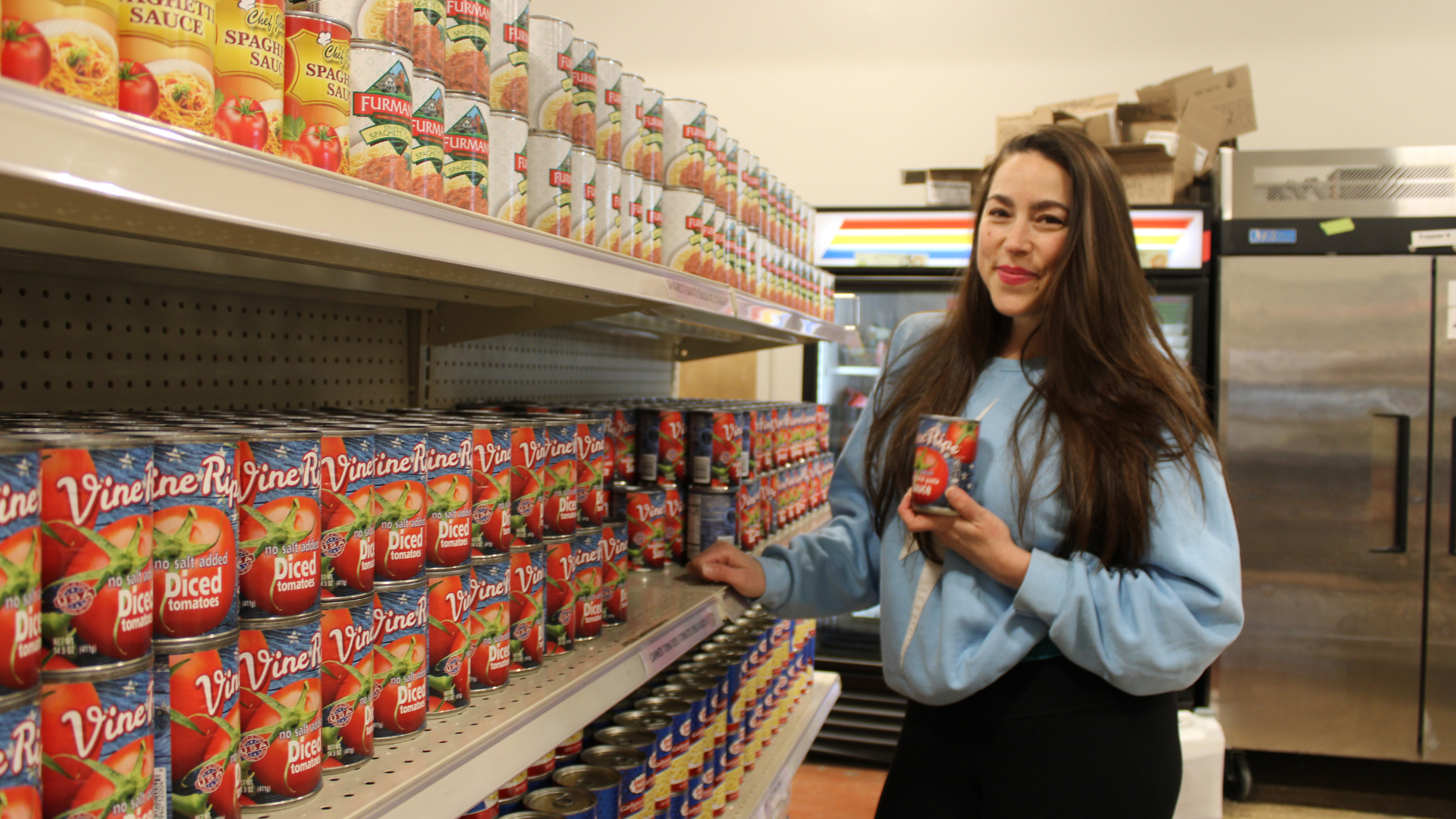
Monday, Wednesday, and Friday afternoons at the pantry follow a particular choreography. Volunteers arrive to restock shelves while processing around 1,500 pounds of rescued food from our retail partners—rotisserie chicken from Tom Thumb, bakery bread from Walmart, produce from Target. It’s controlled chaos. Pallets stacked five feet high block aisles, bins overflow with donations, and if you’re not careful you’ll trip over a case of pasta someone set down to answer their phone.
Which is why, when a clinical intern brought a client through for a late-afternoon shop, I kept apologizing. “Sorry—just squeeze past this bin.”
“Sorry—we’re usually more organized than this.”
(I’m not sure what I was apologizing for. That we have so much food to give away? That we have volunteers doing this holy work? But I apologized anyway, the way you do when showing someone your messy house.)
The clinical intern, the client, and I chatted as we made our way through the aisles, talking about the retail rescue program and the volunteers who make it possible. At every stop, the client murmured gratitude.
When we reached the last aisle where we keep canned vegetables, the client smiled. Green beans, one of her favorites. She grabbed a few cans.
Down the aisle, a volunteer was restocking—balancing a case of canned peas between her knee and the shelf below while turning each can to face outward.
The client paused. “Actually… could I put these back? I just saw the peas, and I didn’t realize you had those.”
“Of course!” I said. “Please take both if you want.”
She turned to the volunteer, apologetic. “I don’t want to mess up what you just did. You worked so hard to make it look nice.”
The volunteer looked up. The afternoon restockers don’t often feel the direct impact they have—it’s physically demanding work making the space ready so that volunteers during appointments can help guide families. Moments like this are rare.
“No, please. That’s what we’re here for,” she said, smiling brightly as she handed the cans over. As they passed from hand to hand, she made direct eye contact.
“I’m glad you’re here.”
The client’s eyes filled with tears. Mine did too.
She took the peas. And the green beans. And thanked the volunteer and I both repeatedly. We finished shopping, and I walked them back through the maze of donations.
After they left, I thought about that volunteer. About how she shows up almost every week, sometimes multiple times, to lift heavy boxes and turn can labels outward. About how she said “I’m glad you’re here” as naturally as breathing.
I thought about how her husband volunteers here too, and how she’s brought her own kids to help stock shelves alongside her, all part of a tapestry of people committed to building the same thing.
There’s the produce manager at Tom Thumb who sets aside donations every Monday morning. The truck drivers who pick up our retail rescue and haul away our spoiled produce to a chicken farmer who feeds it to his hens. Yesterday, a delivery driver knocked on our door with 400 pounds of pepperoni—fell off a truck, boxes got scraped, but the meat was fine. He could have dumped it. Instead, he googled food pantries, found us, and drove over because it was the right thing to do.
Each person making a choice—sometimes in a split second, sometimes week after week—to build something worth living in.
From where I stand, the sheer number of people it takes to make this work leaves me in awe. Over eight hundred volunteers help out each year. Many come every week, some multiple times. Each finds their own way to say: this is the community I want. One where a client doesn’t have to apologize for changing her mind. One where good food reaches neighbors instead of landfills. One where we celebrate what is ours more than worrying about what is mine.
If that’s a community you want to live in too, we could use your help. We need people to restock shelves, sort donations, welcome families, answer phones. We need people who can lift heavy boxes and people who can’t. We need people for a few hours a week and people for a few hours a month. What we really need are people who want to look another human being in the eye and mean it when they say: I’m glad you’re here. Because that’s what we’re here for.